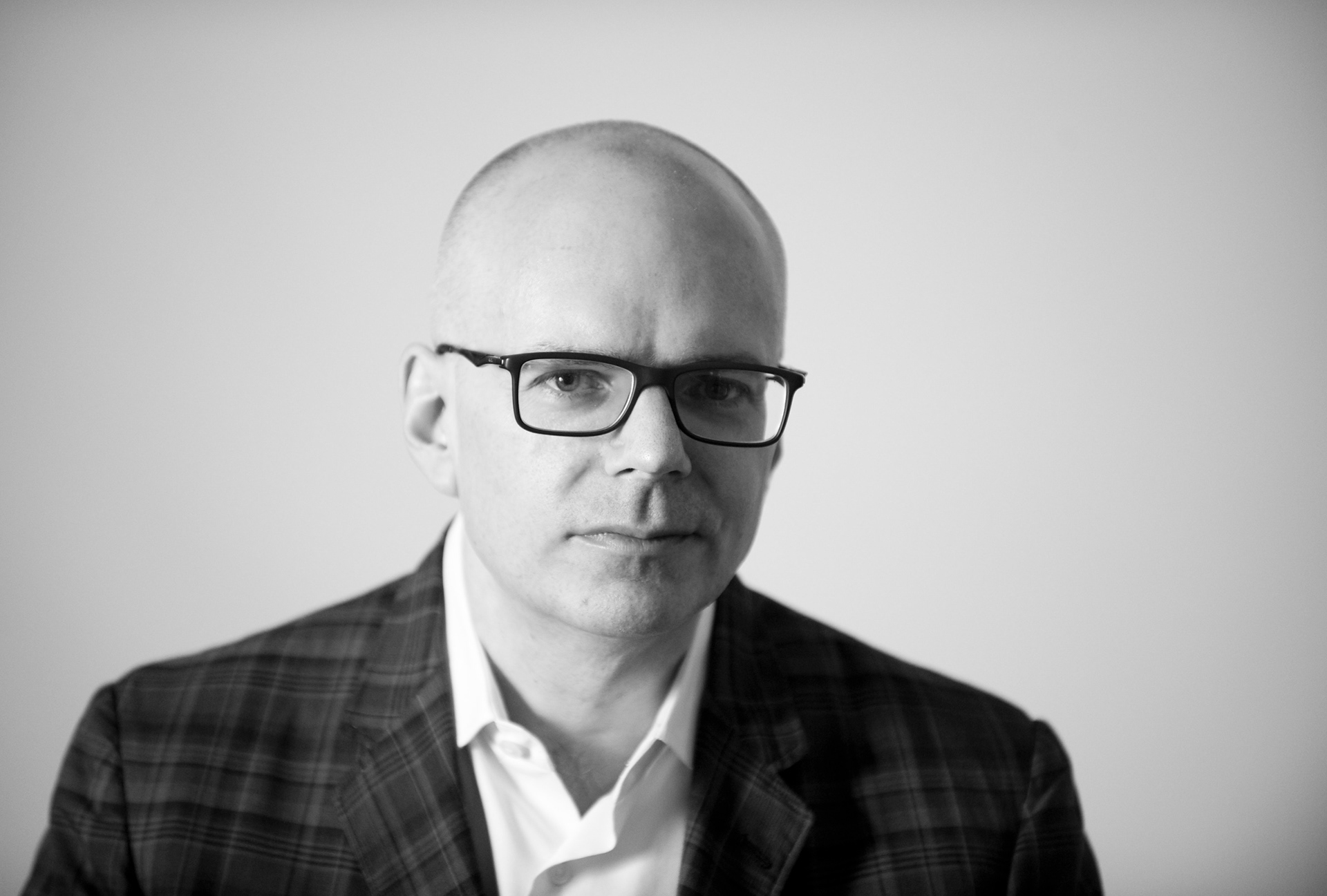
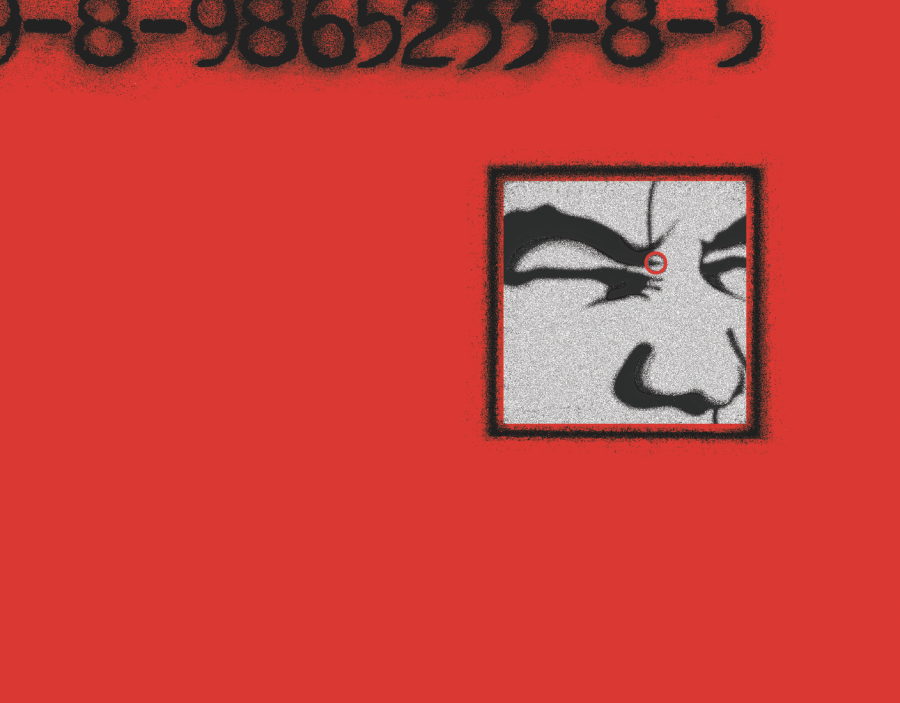
Luke Rolfes: We are here today with poet William Lessard. William’s exciting new book /FACE is out now from Kernpunkt Press. Thanks for spending some time with us! I’ve always liked Kernpunkt Press’ books—they represent a wide variety of experimental and underground texts, and /FACE is an excellent addition to their list. Can you tell us about the genesis of this project and how it came into the world?
William Lessard: My day job is in technology. About 10 years ago, I was working with a company that used iPhone cameras to do motion capture. The software was a bit buggy, but it was good enough to shock anyone who had their facial expressions mapped to a cartoon lion on a computer five feet away. For me, the experience sent me down a rabbit’s hole of research. I wanted to know where this technology came from and what its creators intended to do with it. My searching took me directly to Google Patents, which is a wonderland of strangeness. I looked up all the patents about facial capture and surveillance. Big surprise: everything I found confirmed my worst suspicions.
LR: In your artist statement on your website, you describe yourself in this way: “Despite the materials I use, I am not a ‘futurist’ or ‘experimental writer.’ I consider myself a 21st-Century Realist who makes art out of contemporary things, not forms left over from the Middle Ages.” I really like that description of you and your work. You also say that “being current is primary.” Why is it vital for you as an artist to be focused on the immediate? Why is it important to be writing about things and in forms that are occurring right now?
WL: My day job depends on the 5Ws—Who, What, Where, When, Why? Why, of course, is the most important. It’s what journalists want to know and what artists should also be asking. Take Warhol, for example. Instead of being the 2,365th Abstract Expressionist, he chose to work with objects right in front of him. Consumer objects. I don’t know why we have forgotten how to look. Maybe because we are hung up on acceptance. We forget that most art movements are predicated on technology. For the Impressionists, it was the camera. For the Cubists, it was the slowed framerate of film. For Renaissance painters, it was the lens, or the Camera Obscura. Artists didn’t suddenly just decide to stop painting people as allegories; the lens put them closer to the object, its breathing.
LR: Kind of a follow up to that: This is an overwhelming time to be alive—the rapid advancement of technology coupled with a quickly globalizing, polarized world with a million complicated issues floating through our consciousness. I’m curious: As a contemporary artist living in this reality… is it more “this is giving me so much material to explore through art” or is it “if I don’t make art about this, I am going to explode”? Is it both?
WL: It always has to be both. Art doesn’t matter without risk. My wife and I went to Mount Etna over the summer. Our guide was a geologist. He told us that people who live under the volcano can’t go to Home Depot to buy building materials for their retention walls. The walls have to be built from the same volcanic material. To me, this is a lesson in art. Art only works if we use what wants to destroy us. Doing avant-garde art, or whatever you want to call it, is no excuse. The work has to matter, take risks, be vulnerable.
LR: This book features three poems (or maybe you think of them as sections). The way you put this book and its text/images together reminds me somewhat of a collage. Can you speak to your process of constructing this book and the intentionality you had in organization?
WL: The book is a text made up of borrowed texts. It’s sewn together so the reader can complete it themselves. That was my logic. I was working toward a piece that was always somewhere else. The first section is about documentation, the second is practice, the third is failure. The product never launches. We are the living embodiment of its failure, and thank goodness for that.
LR: /FACE addresses facial recognition technology and our online loss of identity. Aside from technology and the current social-technical climate, were there any films, books, art, albums, etc. that inspired /FACE or served as companion pieces to this project? What kind of stuff did you gravitate toward as you were writing this?
WL: Nancy Spero’s “Torture of Women” is all over this book. I love her repetition of classical figures alongside text collaged from news reports about violence. That hot/cold really knocked me out. And the frieze layout, which suggested paging through a newspaper, felt close enough to “swiping” on an electronic device. Siglio put out a great monograph of this piece about five years ago. Dictée by Theresa Hak Kyung Cha was also a big influence, as was Don Mee Choi, and Hannah Weiner. I love their inventiveness and how they always situated language alongside image.
LR: One of the things I like about this book is the freshness of your imagery and language. I was struck by this line in an earlier poem: “Like the poison you once carved from an enemy’s breath.” These lines aren’t precisely idiomatic, but they seem to walk the line between image and idiom. Can you talk about your process of building language and phrase in your poetry?
WL: Even if we aren’t creating traditional lineated poetry, we are always dealing with line. And every line is a bargain with the reader. Are we being interesting? Or are we boring them to death with our cleverness? When I write I imagine throwing a baseball. The baseball has to go right to the center of the center of the center. We have to throw the perfect pitch, every time. Or be trying to. As with the project itself, there has to be stakes. That line you quote, I am trying to kill someone with those words.
LR: The first poem/section is “techniques for creating facial animation using a face mesh.” This piece comprises the first ¾ of the book. I am fascinated by the associative nature of this section, how it jumps and circles an idea, and comes back to it from a different angle and direction. What can you tell us about generating this poem and transforming it to its final form? Did you always see it as one cohesive piece, or was it broken up into smaller parts in earlier drafts?
WL: I waded right into the muck of Surveillance Capitalism love iconography. I started with its language as my source code. My goal was to move it toward something resembling poetry without losing its gleeful fascism. I spend most of my time looking for this boundary and the rest moving and cutting the poems themselves. I was listening to a lot of 1970s Miles. I wanted a lot of that noise in the series, mixed with the quiet parts that make the noise matter.
LR: I appreciate that you’ve used all sorts of forms in these poems—from graphics to tables to erasures. How do you go about deciding what form is the best vehicle for what you want to express? Has a poem ever gone back and forth between different forms?
WL: The work has been worked over. In the first section in particular, I wanted the pieces to have a Cy Twombly thing happening. I wanted energy, bursting. I wanted explosions, which meant casting and recasting poems in different forms. I had never edited this way before. Because of the visual element, I needed variance. I couldn’t do dense or all monostitch. I would lay things out to see how they looked and then I would read to figure out how everything sounded.
LR: I was struck by the section of the opening poem called “Findings: [2915] Terrible Faces.” This section begins with the line: “The face is the person we are disappointed to see.” It builds toward this idea: “Many receive the face in their 50s. Others die; the face formed too early.” This poem seems to conflate (and then maybe un-conflates) face and identity. The idea that face is tied intrinsically to identity is a fascinating one. But then what does it mean when we use filters to transform our faces? What does it mean when technology tries to analyze our faces into a constellation of shapes and lines? Can you talk about this idea of face/identity and what led you to explore it so deeply in this book?
WL: I mean the self no longer exists. The Romantic Self. The religious self-the soul. It’s gone. All we have is the conversation with the algorithm. It’s the same algorithm I’m collaborating with right now, the one finishing my words. Our face is the last mile and Ground Zero for our subjectivity. Every 12-year-old knows what’s happened, although they would never put it in these terms. When people say they want to be “seen,” what they’re really saying is that they want to have “value” in this marketplace of selfhood. It’s the same reason “MAGA Face” has such currency, or why we’re never sure who someone is until we meet them in the real world.
LR: I’m curious: When you ruminate on a subject matter (such as the concept of the face) and create art about this specific subject, does it change the way you look at the world? Do you start to see things around you differently?
WL: The art helps the seeing and the seeing helps the art. Obsession is the only way to get anything done. Because we live in a time without set forms, we only have repetition, repetition, repetition. Repetition is obsession that went to art school.
LR: In the poem/section “do we have a plan B?(*),” I was drawn to the vignette that begins with “The patent for the ‘Double-Swinging Mirror Compact Case.’” This section contemplates the concept of the mirror. “The mirror was the beveled line. Before it, people were blurred allegories. It was only when they thumbed the imperfections of their faces they realized how joyfully doomed they were.” I’m curious about the starting point for this poem? Did it spring forth from the concept of the compact case mirror, or was it an offshoot on your extended rumination of faces?
WL: I don’t know how that one started. I think I was trying to figure out when the consumer concept of selfhood became widely available. Peasants didn’t have grant halls filled with mirrors. With the patent, dated 1922, I was answering my own question: When did everyone have easy access to narcissism?
LR: The final section of this book is called “Head Template.” It is a series of images—a man’s profile with different text transposed over the top of the brain. Can you talk about why you wanted to end the book on this particular note and in this particular way?
WL: The book goes from the face to the skull. From the mutable to immutable. I took a PowerPoint template and stripped everything else away. There is a video version of that piece, with each head changing color. I’d love to make that an installation one of these days.
LR: What’s next for you and your work? What are you up to now?
WL: I have been making something out of blood. You folks are going to be running two pieces from the series in an upcoming issue. It’s the opposite of everything I have been talking about in this interview. Yes, I contradict myself.
LR: That's right! You can check out a couple of William Lessard's new pieces in issue 58.2—should be out this summer. Thanks so much for the conversation! This is a really fascinating and exciting book. Everybody should check out /FACE from Kernpunkt Press.