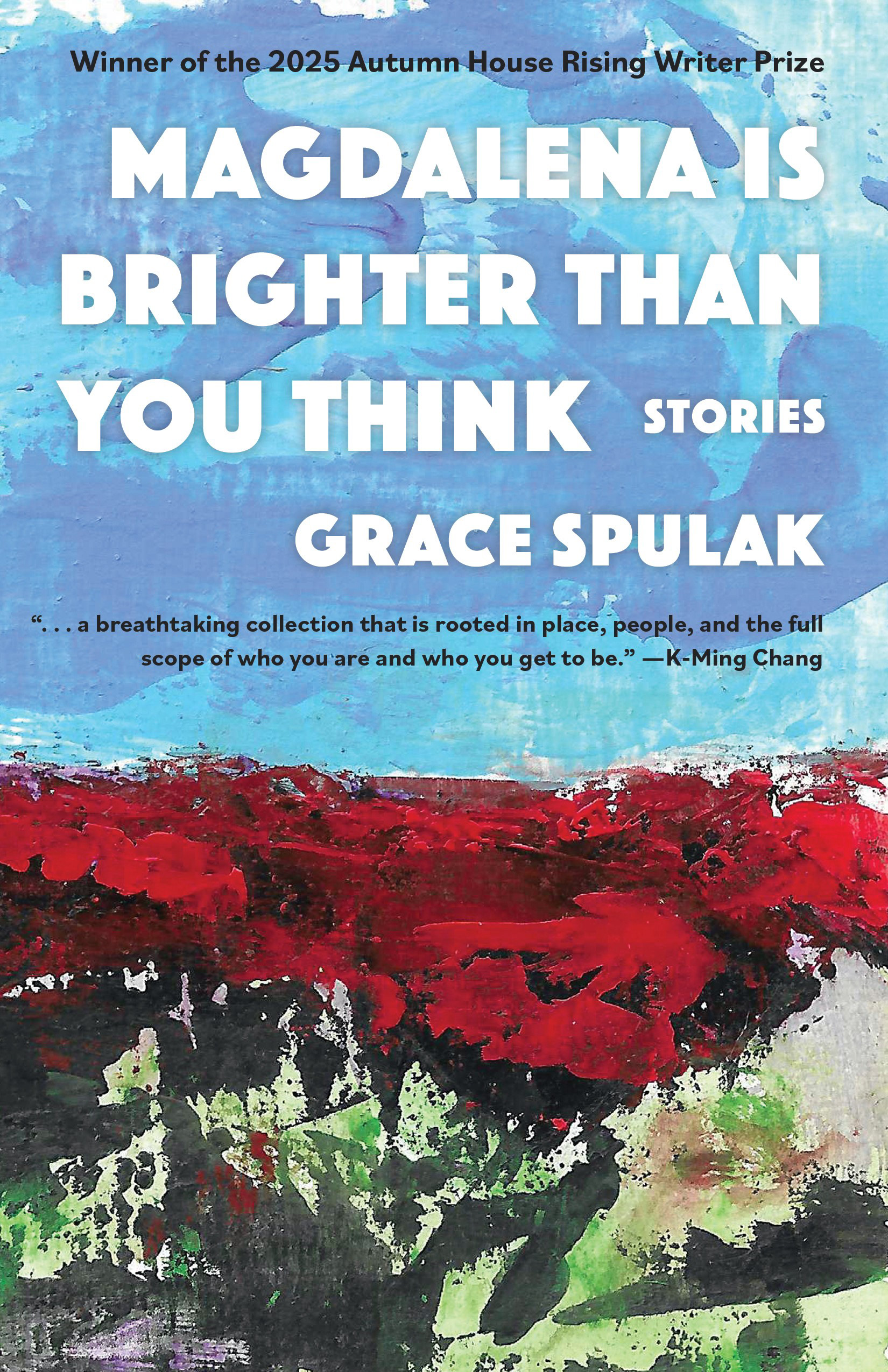
Emma Beattie: Congratulations on winning Autumn House’s Rising Writer Prize! Many of the stories in this collection engage with the legal system. In “Rid of It,” Marisa is haunted by the time she and her ex-girlfriend, Ashlynn, had murdered a man. And in “Maybe It Wasn’t You,” Areli, a social worker, is assigned the task of saving children from their neglectful parents. Both stories work as critiques of the legal system. Considering your background as an attorney, what inspires you to tell these stories?
Grace Spulak: Thank so you much for your congratulations!
In response to your question, I worked as an attorney representing children and young people in New Mexico for close to ten years. One of the things I learned very early on in my work is that our legal system is often poorly set up to meet the needs of the people who get entangled in it. This is particularly true when these people have little social power like children. And I also found that our legal system prioritizes certain types of stories and storytelling, one that uses legalese and needs clear good guys and bad guys with no room for error. Needless to say, this doesn’t fit the lives of many people, including many of my clients. So part of what I’m interested in is how the legal system fails people because it doesn’t make room for people to tell their stories fully and authentically or it doesn’t honor those stories.
EB: Some writers have said, “geography is everything,” when it comes to building characters in fiction. This saying has stuck with me because—who are we if not the products of our environments? Since you chose “Magdalena Is Brighter Than You Think” as the title and opening story, I presume that you agree with this. Magdalena, New Mexico is a real place, after all, and it might be considered just as much “in the margins” as your characters. Could you speak on how place influences the people who show up in your stories?
GS: I think the idea of Magdalena being “in the margins” is really spot-on. Many of the places in this collection are overlooked and forgotten, and I wanted to call attention to the beauty and strength of these places. I grew up in a semi-rural, New Mexico community that felt overlooked but where there is incredible community and people have developed these amazing survival skills and networks to support each other. And for me, the places in these stories are inextricable from the New Mexico landscape, which on first glance can look dead and monochrome but actually contains so much life and diversity. The places and characters in this book are dismissed and overlooked but still manage to thrive in unique and surprising ways.
EB: Certain stories in this collection might be viewed as more narratively experimental than others. For instance, the narrator in “The Literal” uses a numbering technique, rather than space breaks, to tell her story; and in “The Red Line” you black-out or leave spaces at certain points of the text. I am curious as to how you decide on what form to use. More precisely, what compels you to be formalistically experimental with some stories, and more traditional with others?
GS: I try to let the story dictate the form. For example, in “The Red Line,” the protagonist has a brain injury that leads her to experience language in very particular ways, and I wanted the text of the story to reflect that. And in “The Literal,” the numbering works to push against the idea of stories as creating or needing to create a sense of order. For stories that seem to have a more “traditional” form, I think in some ways I am also playing with ideas of what make a traditional narrative. Some of the stories move around in time in ways that are non-linear and some contain elements that might be called speculative or surreal. I’m always thinking about how narrative form supports certain stories but also how particular narrative forms might be exclusionary.
EB: In “The Four Winds,” Martha is characterized by her “meanness.” As the story unravels, we learn that she is “careful to give nothing away” because she is aware of “what happens to people who look weak and needy.” Interestingly, Martha is not the only one who puts up this front. Almost all of your protagonists find it important to appear strong to others, even though they are struggling. Since none of the men in your stories present this attitude, I wonder if, to you, this quality is inherent to being a woman in the twenty-first century. Do women feel the need to protect themselves in our society by highlighting their toughness? And is this toughness necessary for women to be successful?
GS: I don’t know that it’s necessary. I’d like to think that it’s not. But a lot of these female characters are in situations where they have little power and they see strength or a show of strength as a way to exert power or attempt to exert power. I think it speaks to our social concepts of gender and power and the way that people who present as female are often perceived as weak. Many of these characters have been harmed because they were perceived in this way, and they try to counter it by taking on this toughness. And there are characters who are also considered “mean,” like Martha, because they fail to take on some of the stereotypical traits of femininity. Part of what I’m interested in exploring is how these stereotyped ideas of gender don’t conform to people’s lived realities and actually limit people.
EB: I am always curious about how writers decide on the order of the stories in a collection. Specifically, as it applies to the first and last stories—“Magdalena Is Brighter Than You Think” and “More Than Bright.” My mind associates the word “bright” with hope, which, although present in glimpses of these characters’ lives, is largely absent. The title story ends with a nod to life being absurd: “Things come down on you no matter what you do, and all you can do is put yourself out in the open and wait for them to come.” So, how did you settle on the brightness, the hope amongst the absurdity, as a lasting image?
GS: I wanted something that would convey how these characters persist despite many of the challenges and absurdities of their lives, which to me feels hopeful, even if there’s not an imminent change on the horizon for them. I felt using the idea of brightness to bookend the collection would nod to this resilience and the unconventional ways these characters continue in their lives despite the way they often have little agency and little ability to make change for themselves.
EB: In my opinion, “Almost Autofiction” fits into this story collection really well. Anyone who has participated in a writing workshop has heard the critiques: “That’s too messy for fiction” or “That doesn’t happen in real life.” In “Almost Autofiction,” the narrator seems aware of their story’s lack of verisimilitude. They obsessively seek a reason for what had happened to them—some sort of meaning behind being raped and almost murdered by a teenager they had hardly known. Interestingly, an event like this is not uncommon in your stories. All eleven of them involve either murder, deeply tragic childhoods, sexual abuse, or all of the above. What is it that draws you to writing about these topics? Do they approach some sort of capital “T” truth about humanity that we attempt to ignore?
GS: I think there are a couple of things that make me interested in these stories. One is that old idea of “write what you know.” I’ve experienced a lot of trauma and grew up in a community where other people did too. And in my work as an attorney, I also encountered people who had experienced trauma. I feel like these are stories that get ignored or glossed over or dismissed because they’re “too hard” or they don’t fit a particular narrative mold that is causal and where the protagonist has agency to change the story. We want stories to help us make meaning, but what I found is that often this violence doesn’t have meaning or it feels impossible to make meaning out of it. And I don’t think stories that grapple with that inability to make meaning often get told often. So I was interested in that idea in a lot of these stories. What do we do when stories don’t help us make meaning? How do we go on when we can’t make meaning out of the things that have happened to us?
EB: What is next for you as a writer?
GS: Right now, I’m working on a novel that is based around Catherine of Siena, a Fourteenth Century mystic and is set largely in medieval Siena, Italy. This novel has been both fun to write so far and also really challenging. It’s definitely a big change of setting from rural New Mexico where Magdalena largely takes place, but it deals with similar themes of gender, power, and who gets to tell what stories.
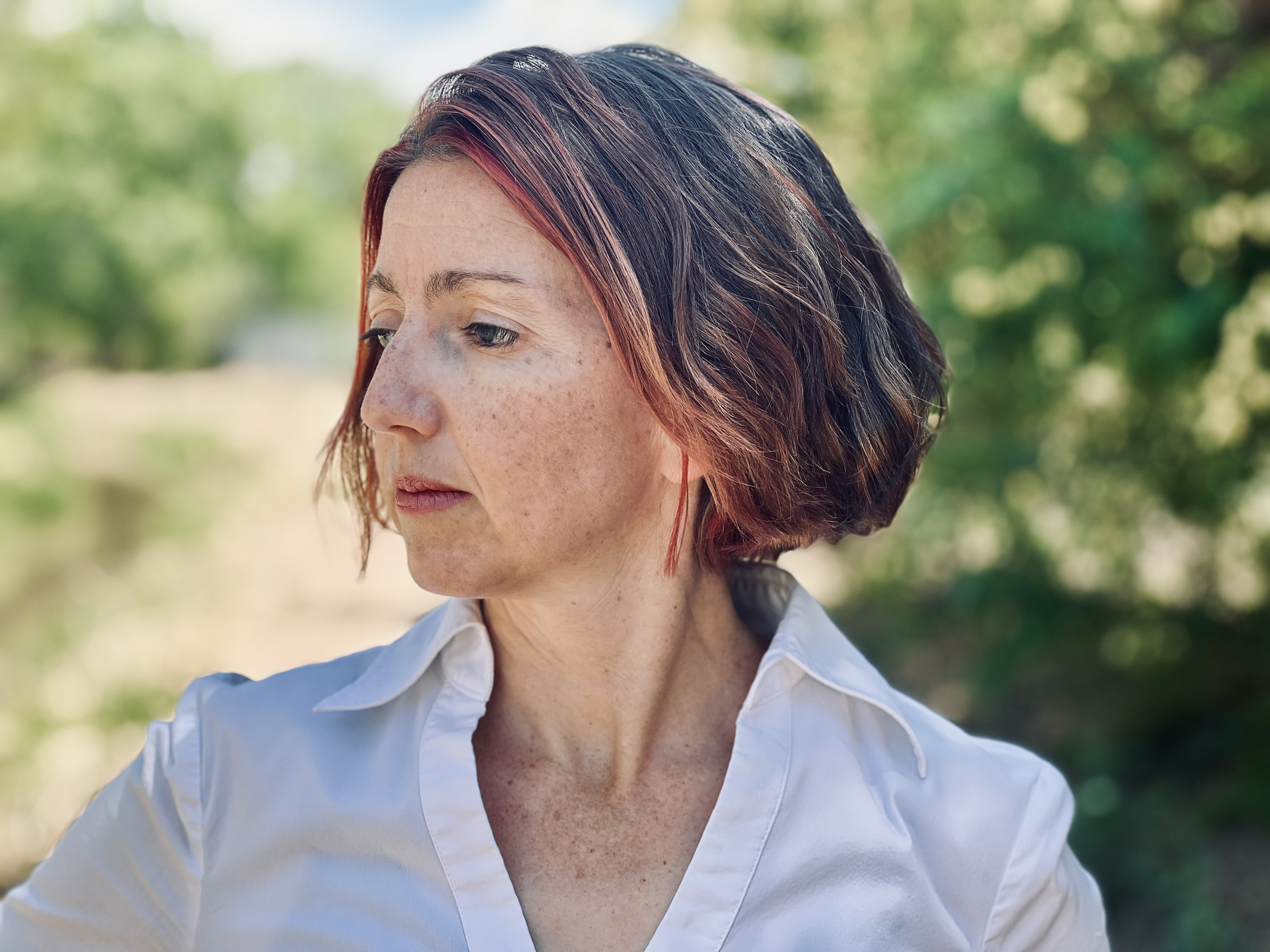
Bio: Grace Spulak is the author of the short story collection, Magdalena Is Brighter Than You Think (April 2026), winner of the 2025 Autumn House Press Rising Writer Prize. A writer and attorney based in her home state of New Mexico, she holds an MFA from the Warren Wilson Program for Writers and a JD from Harvard Law School. Her work was awarded Witness Magazine’s 2021 Literary Award in Fiction and has appeared in the Ploughshares blog, Nimrod International Journal, and Southwest Review, among others, and her work has received support from Trillium Arts, New Mexico Writers, and Poets & Writers.
Interviewer Bio: Emma Beattie studied creative writing at the University of Arkansas at Little Rock. Her debut fiction is forthcoming from the Equinox literary magazine.